Recommended Shutter Speeds for Wildlife Photography


One of the most common questions I get in the field is also one of the most important: what shutter speed do I actually need to freeze certain types of wildlife movement?
It sounds simple enough, but even slight differences is wildlife behavior has massive ramifications on what shutter speed you need. A sleeping polar bear is one thing. A twitchy bird under the rainforest canopy is another. A sparring bear, pouncing fox, or flying bird?
All different beasts entirely—literally and photographically.
In a recent episode of The Wild Photographer, I dug into the shutter speeds I personally use for different types of wildlife motion. Below is the practical field guide version...the settings I’d want in my head when things start happening fast.
First: Hand Movement vs. Subject Movement
Before we get into animals, there’s one important distinction. There are two types of movement that affect sharpness:
Hand movement is the motion caused by you holding the camera. This is where the classic “one over focal length” rule comes in. If you’re shooting at 400mm, a good minimum handheld shutter speed is roughly 1/400 second. Image stabilization can help here, but I’m fairly conservative with it. Even with great stabilization, I don’t love going much slower than about half the focal length. So, with a 400mm lens, I’d still be cautious below about 1/200 second.
Subject movement is the animal moving. This is the big one for wildlife and is the subject of this article. Image stabilization, tripods, monopods, and gimbals do not freeze a bear walking, a bird twitching, or a lion cub playing. They only help stabilize your camera from the aforementioned "hand movement" issue.
To freeze the animal, you need shutter speed.
Quick-Reference Shutter Speed Table
Wildlife Motion Type | Example | Recommended Shutter Speed |
Resting animal, no movement | Sleeping bear, still bird on branch | 1/100–1/250 sec |
Slightly restless animal | Ear twitch, head turn, alert lion in grass | 1/200–1/320 sec |
Restful interaction | Nursing cub, quiet family behavior | 1/250–1/500 sec |
Calm but steady movement | Polar bear walking slowly, animal browsing | 1/320–1/600 sec |
Playful interaction | Young gorilla playing, cubs wrestling gently | 1/500–1/800 sec |
Walking or trotting mammal | Raccoon walking, bear strolling, casual jog | 1/800–1/1250 sec |
Fast movement | Sparring bears, chase behavior, rolling action | 1/1600–1/2000 sec |
Frenetic movement | Bird in flight, pouncing, twitchy action | 1/1600–1/3200 sec |
Twitchy birds | Perching, hopping, quick head turns | 1/250–1/1600 sec |
Intentional motion blur | Panning, creative movement | 1/40 sec or slower |
Handheld landscapes | Still landscape, wide lens | 1/50 sec minimum; 1/200+ preferred |
Resting Animals: 1/100–1/250 Second
If an animal is truly still—sleeping, resting, or perched without movement—you can get away with slower shutter speeds. This is especially useful in low light, like early morning or late evening.
That said, “still wildlife” is a bit of a paradox. Even resting animals blink, breathe, twitch, or turn their heads. So while 1/100 second can work, I’m much happier closer to 1/250 if the light allows.

Slightly Restless Animals: 1/200–1/320 Second
This is the category I use for animals that are mostly still, but not frozen in place. Think of a lion lying in the grass but looking around from time to time, or a bear resting but occasionally moving its head.
This is where 1/200 second becomes my minimum, but 1/320 is safer. If there is enough light, there’s no harm going faster. These numbers are floors, not ceilings.
Restful Interactions: 1/250–1/500 Second
Some of the most beautiful wildlife moments are gentle ones: a nursing cub, a quiet nuzzle, a mother and baby resting together. These scenes are calm, but there is still movement. And the key differentiator is that there is consistent slight movement. Pauses are few and far between.
For this kind of interaction, I’d aim for 1/500 if possible. You do not want to come home from a once-in-a-lifetime nursing bear sighting and realize the entire moment is just a little soft.
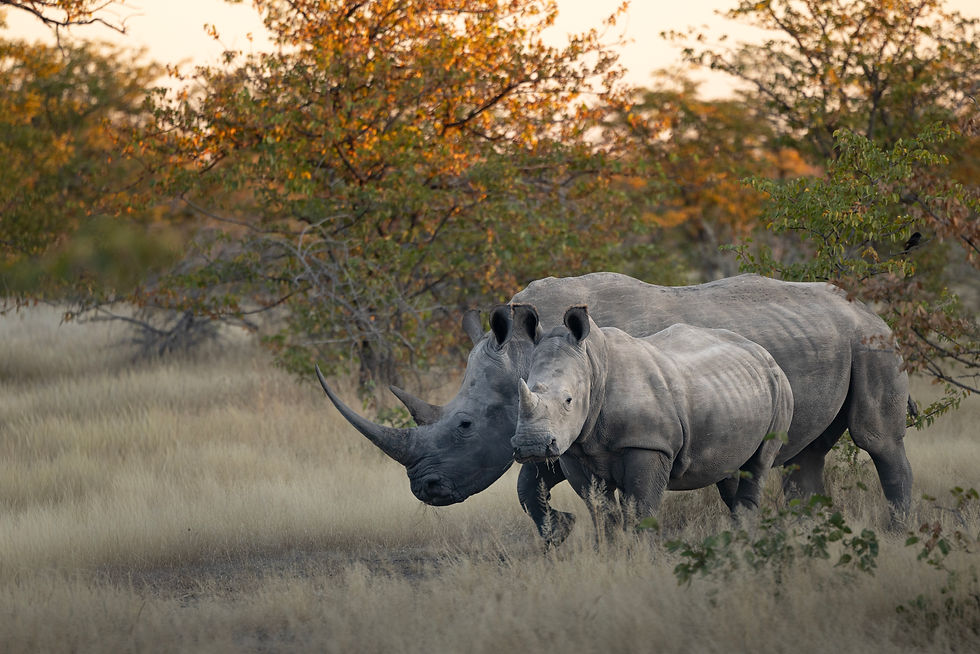
Calm, Steady Movement: 1/320–1/600 Second
This is for slow, predictable movement., but a touch faster than the previous example. An animal walking calmly through grass. A polar bear gently moving through willows. A grazing animal shifting through the landscape.
I’d start around 1/320, but 1/500 or 1/600 gives you more breathing room. This is also a great example of where your focal length matters. At longer telephoto lengths, slight subject movement becomes more obvious.
Playful Interaction: 1/500–1/800 Second
Once behavior gets playful, shutter speed matters a lot more. Baby gorilla tumbling around? Cubs wrestling? A young animal pawing at a parent?
This is where I want at least 1/500, and I’m much happier around 1/800. You’re not just photographing an animal anymore—you’re photographing behavior. Expressions, gestures, and split-second body positions matter.
This is also the first category where you might consider intentional motion blur if you’re feeling creative (we'll get to a formula on this later). But if your goal is a sharp, frozen image, stay fast.

Walking or Trotting: 1/800–1/1250 Second
For a mammal quickly walking, trotting, or jogging along, I consider 1/800 second the real starting point. If it’s moving with any pace at all, I’ll happily jump to 1/1000 or 1/1250.
This is where a lot of photographers get burned. A walking animal looks slow to our eyes, but through a telephoto lens, there’s a lot of movement happening: legs, head, shoulders, tail, fur, and background compression all working against you.
Fast Movement: 1/1600–1/2000 Second
Now we’re into action. Sparring bears, rolling animals, chase scenes, sudden bursts of behavior—this is where I want 1/1600 or faster.
If the light allows, 1/2000 is a beautiful place to be. At these speeds, you’re giving yourself a strong chance of freezing the peak moment: the lifted paw, the open mouth, the splash, the leap, the expression. But, it takes a lot of light, so just keep tabs of your ISO and adjust as needed.

Frenetic Movement: 1/1600–1/3200 Second
For really quick, reactive motion—birds in flight, pouncing animals, twitchy movements you want to freeze in time, fast wingbeats—I’ll start at 1/1600 and go up to 1/3200.
Could you go faster? Sure. Some cameras go to 1/4000 or 1/8000. But in real-world wildlife photography, 1/3200 handles most situations beautifully. The exceptions are things like hummingbird wings or insects in flight, where even very fast shutter speeds may not fully freeze every bit of motion. But honestly, if you're not going to catch it at 1/3200, I'm not sure if 1/4000 is going to make a meaningful difference.
A Note on Twitchy Birds
Birds deserve their own category because they can be twitchy...crazy fast movement one second, and then a split second of stillness.
A bird on a branch might be perfectly still for half a second, then twitch, hop, turn, or fly. If you time it right, you might get a sharp shot at 1/250. If you hit the shutter during movement, you may need 1/1600 or faster.
This is where your camera’s high-speed drive mode becomes incredibly useful. At 10, 20, or 30 frames per second, you dramatically improve your chances of catching those tiny pauses between movements. Even with a 1/4 second pause by the bird, that could yield you 3+ photos during that "still" moment, and that's a win.

When to Embrace Motion Blur
Not every wildlife photo needs to be tack sharp. In fact, intentional motion blur can be one of the best ways to make your work look different from everyone else’s.
For creative blur, I generally think about 1/40 second or slower. Try 1/20, 1/10, 1/8, 1/5, or even 1/2 second depending on how much movement and the speed with which it is happening.
Panning is a level-up technique here. If an animal is moving predictably from left to right, follow it with your lens while shooting at a slow shutter speed. Done well, the animal stays relatively sharp (or at least in the VERY blurry photo below, you can still tell kinda what it is...) while the background becomes beautifully streaked and painterly.
It does not work every time. Honestly, it fails a lot. But when it works, it can produce one of the most memorable images of a trip.

A Few Field Hacks
The biggest way to get faster shutter speeds is to open your aperture or raise your ISO. A lens at f/2.8 lets in twice as much light as f/4, which means you can double your shutter speed at the same exposure. That is why these are called “fast” lenses.
Don't be afraid of higher ISO, especially if you shoot RAW and use modern de-noise tools. I’d rather have a sharp, slightly noisy image than a clean-but-blurry one.
You can also zoom out and make the animal smaller in the frame. A slightly soft subject is far less noticeable in an environmental wildlife portrait than in a tight frame-filling close-up.
And finally: use your high-speed drive mode. This is one of the best ways to beat motion. Even with twitchy animals, a burst of images often captures the tiny still moments between movements.
Final Thought
Shutter speed is not about memorizing one magic number. It’s about reading behavior.
Is the animal still? Restless? Walking? Playing? Pouncing? Flying? The moment you can identify the type of motion in front of you, you can make smarter, faster decisions with your camera.
And remember, these shutter speeds are not rigid laws. They’re field-tested starting points. Use them to freeze the action when you need to—and then break them intentionally when blur tells the better story.
Hope you enjoyed, and best of luck out there!
Court


These are good guidelines. I recently went on a NatHab trip to Alaska where we had the opportunity to photograph whales. How about an article or podcast about shooting wildlife in the water. Thanks.